SDG 2 – Zero Hunger Outreach
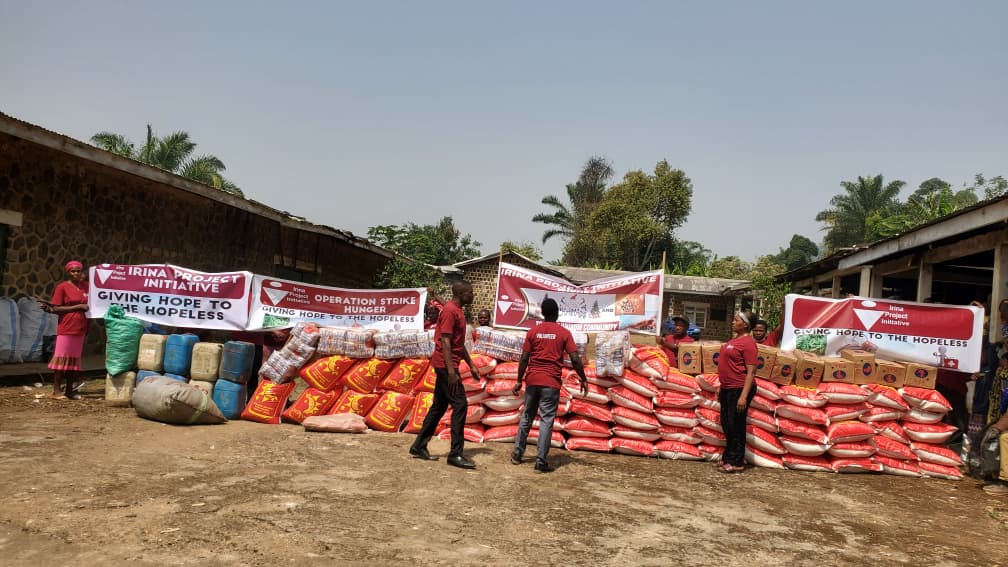
While much of the world marked the beginning of a new year with celebration, Irina Project Initiative began the year with service. In Njinikom, within the Kom community of Bamenda, Cameroon, the organization carried out a large-scale food distribution outreach aligned with Sustainable Development Goal 2 (Zero Hunger). The initiative reached over 600 individuals and families across Njinikom and the wider Kom area, delivering essential food supplies and basic household items to vulnerable households.
This outreach was not simply an act of charity; it was a structured humanitarian intervention rooted in dignity, community collaboration, and global development principles. It reflected Irina Project Initiative’s sustained commitment to fighting hunger, strengthening resilience, and restoring hope in communities affected by economic hardship and prolonged instability.
Context and Need
The Northwest Region of Cameroon has experienced years of socio-economic disruption that have affected livelihoods, agricultural productivity, local markets, and household incomes. Rural communities such as Njinikom and Kom rely heavily on subsistence farming, small-scale trading, and communal support systems. However, insecurity, displacement, inflation, and limited access to stable markets have increased food insecurity among many families.
As in many vulnerable regions across Africa and the world, food insecurity does not only manifest as hunger; it appears in reduced meal frequency, poor nutritional diversity, and reliance on coping strategies such as borrowing, skipping meals, or selling productive assets. Vulnerable groups include elderly persons, widows, internally displaced families, low-income households, and children.
The New Year period, while symbolic of hope, can also highlight economic strain. Many families begin the year with depleted food stocks following the holiday season and reduced purchasing power. Recognizing this, Irina Project Initiative strategically selected January 1st as a day to intervene — transforming a day of celebration into a day of solidarity.
Objectives of the Outreach
The outreach was guided by clear humanitarian and development objectives:
To provide immediate food relief to vulnerable households across Njinikom and Kom.
To reduce short-term food insecurity among over 600 individuals and families.
To promote nutritional support through staple and protein-rich food items.
To reinforce community solidarity and dignity during a period of economic vulnerability.
To contribute meaningfully to Sustainable Development Goal 2 (Zero Hunger).
Planning and Community Coordination
The success of the outreach was rooted in careful planning and strong community collaboration. Weeks before the distribution, the Irina Project Initiative team engaged with local leaders, youth representatives, women’s groups, and community elders in Njinikom. Beneficiary identification was conducted through community-based verification to ensure that assistance reached those most in need.
This participatory approach reflects best practices used globally by humanitarian organizations such as the World Food Programme and community-based NGOs operating in food-insecure regions. Local validation reduces duplication, enhances transparency, and ensures fairness in beneficiary selection.
Logistics planning involved:
Securing and transporting food supplies safely to Njinikom.
Coordinating storage prior to distribution.
Organizing volunteer teams for crowd management and verification.
Structuring a distribution flow to avoid congestion and maintain order.
Transparency was central to the process. Beneficiary lists were verified before distribution day, and a structured distribution system was implemented to ensure efficiency and accountability.
Items Distributed
The outreach provided substantial and meaningful food support, including:
70 bags of rice (50kg each)
315 liters of palm oil
10 cartons of savon (soap)
Smoked fish
These items were carefully selected for both nutritional value and practicality.
Rice serves as a major staple food that can sustain households for extended periods. Palm oil provides essential calories and is a culturally familiar cooking ingredient. Smoked fish contributes protein and enhances nutritional diversity. Soap, though not food, plays a critical role in hygiene, disease prevention, and public health — particularly important in vulnerable communities.
The inclusion of hygiene items reflects an integrated approach similar to global humanitarian standards, where food security interventions are often combined with WASH (Water, Sanitation, and Hygiene) considerations to protect overall wellbeing.
Distribution Day Activities
On the morning of January 1st, the atmosphere in Njinikom was both hopeful and organized. Volunteers arrived early to arrange distribution stations. Food items were carefully sorted and allocated according to household size and vulnerability criteria.
Community leaders assisted in maintaining order and ensuring that elderly and disabled beneficiaries were given priority access. Registration points were set up to verify names and prevent duplication. Volunteers guided beneficiaries through a structured flow, minimizing crowding and ensuring that each household received their allocated share.
The distribution was conducted peacefully and respectfully. Families received their items with gratitude, and volunteers assisted those who needed help transporting heavier bags of rice. The emotional atmosphere was powerful; for many families, beginning the year with food security brought renewed hope and reassurance.
The outreach did not merely provide material assistance. It strengthened human connection. Conversations between volunteers and beneficiaries created space for listening, empathy, and encouragement. Such relational engagement reflects a dignity-centered humanitarian approach increasingly adopted worldwide.
Drawing from Global Humanitarian Practices
Food distribution initiatives similar to the Njinikom outreach are implemented across the globe in response to hunger and crisis. In regions of East Africa affected by drought, humanitarian organizations distribute staple grains and cooking oil to stabilize food access. In South Asia, community-based organizations coordinate rice and lentil distributions to vulnerable households. In Latin America, food banks and local NGOs provide staple food baskets to low-income families facing inflation and unemployment.
Common elements across successful global interventions include:
Community involvement in beneficiary identification.
Transparent and accountable distribution systems.
Combination of staple foods and protein sources.
Attention to dignity and respectful engagement.
Integration of hygiene considerations.
Irina Project Initiative’s Njinikom outreach reflected these global best practices. Although locally organized, the approach aligned with internationally recognized humanitarian principles of neutrality, fairness, accountability, and respect.
Furthermore, global food assistance programs emphasize that hunger is both an immediate emergency and a structural challenge. While large institutions address systemic agricultural development, localized NGOs play a vital role in bridging urgent food gaps. Community-rooted interventions such as this one often reach individuals who may not be covered by larger institutional programs.
Cultural Sensitivity and Local Relevance
An essential factor in effective humanitarian response is cultural sensitivity. The food items distributed in Njinikom were chosen with local dietary patterns in mind. Rice, palm oil, and smoked fish are common components of meals in the region, ensuring that families could easily integrate the supplies into their daily cooking practices.
In many parts of the world, food assistance fails when culturally unfamiliar foods are introduced. By contrast, Irina Project Initiative’s outreach recognized and respected local food traditions. This approach strengthens acceptance and ensures the assistance is both practical and meaningful.
The Kom community, known for strong communal ties and agricultural heritage, values collective support. By working with local leaders and ensuring transparency, the initiative reinforced community trust and solidarity.
Contribution to Sustainable Development Goal 2
Sustainable Development Goal 2 aims to end hunger, achieve food security, improve nutrition, and promote sustainable agriculture. It recognizes that hunger undermines education, health, economic productivity, and long-term development.
The Njinikom outreach contributed to SDG 2 in several ways:
It provided direct food access to over 600 individuals and families.
It improved short-term household food security.
It supported nutritional intake through staple and protein foods.
It promoted dignity and community resilience.
While a single distribution does not eliminate structural hunger, it significantly reduces vulnerability during critical periods. In humanitarian practice, such interventions are recognized as essential short-term stabilization measures that prevent deeper crises.
Immediate Impact
The immediate impact of the outreach was evident. Families left the distribution site with tangible relief. Households that had been uncertain about how they would begin the year gained access to essential food supplies.
For elderly individuals and widows, the assistance reduced anxiety and restored confidence. For children, it meant continued access to meals without disruption. For families recovering from economic hardship, it represented solidarity and recognition.
The presence of hygiene supplies further strengthened the intervention’s health impact, contributing to disease prevention and overall household wellbeing.
Broader Social Impact
Beyond immediate food relief, the outreach strengthened social cohesion within the community. Volunteers, leaders, and beneficiaries worked together peacefully. The initiative fostered unity at the start of the year, setting a tone of compassion and collective responsibility.
Humanitarian research worldwide shows that community-based food assistance strengthens trust, reduces social tension, and reinforces shared identity. The Njinikom outreach reflected this dynamic. It was not only a material intervention but a social one.
Challenges and Lessons
Like many humanitarian activities, the outreach required careful crowd management and logistical coordination. Ensuring fairness while serving large numbers of beneficiaries demands organization and discipline.
Lessons reinforced include:
The importance of early planning and beneficiary verification.
The value of community leadership involvement.
The need for adequate volunteer mobilization.
The importance of combining food and hygiene supplies.
These lessons align with global best practices and will continue to inform future outreach activities.
Commitment to Continued Action
The January 1st outreach in Njinikom marks a continuation of Irina Project Initiative’s broader commitment to combating hunger and promoting dignity. It builds upon previous SDG 2 activities and reinforces the organization’s dedication to vulnerable populations.
While food distribution addresses immediate needs, the Initiative remains aware that long-term solutions require agricultural support, livelihood empowerment, and sustained community engagement. The organization remains committed to expanding its reach, strengthening partnerships, and advocating for food security as a fundamental human right.
Conclusion
The SDG 2 outreach carried out on January 1st, 2026, in Njinikom and the wider Kom community of Bamenda, Cameroon, stands as a powerful example of compassion translated into action. Through the distribution of 70 bags of rice, 315 liters of palm oil, 10 cartons of savon, and smoked fish, Irina Project Initiative reached over 600 individuals and families at a critical time.
The initiative combined careful planning, community collaboration, cultural sensitivity, and global humanitarian principles. It provided immediate food relief while reinforcing dignity and solidarity.
As the year 2026 began, hope was restored in many households. The outreach reaffirmed that even in the face of hardship, collective action can reduce hunger and strengthen resilience.
Irina Project Initiative remains steadfast in its mission to fight hunger, protect dignity, and contribute meaningfully to a future where no one is left behind.